Italy is famous for its food, art, music, and history, but its language is just as rich and varied. Many language learners are surprised to discover that “Italian dialects” are not simply accents. In many cases, they are distinct regional languages with their own grammar, vocabulary, pronunciation, and centuries of local history and tradition. So, how many Italian dialects are there? The answer depends on how you count them.
How Many Italian Dialects Are There?
There is no single official number of Italian dialects. Linguists estimate there are over 30 major dialect groups and hundreds of localized vernaculars spoken throughout Italy. Because many of these varieties evolved independently from Latin, they are often classified as distinct regional languages rather than simple variations of Standard Italian.
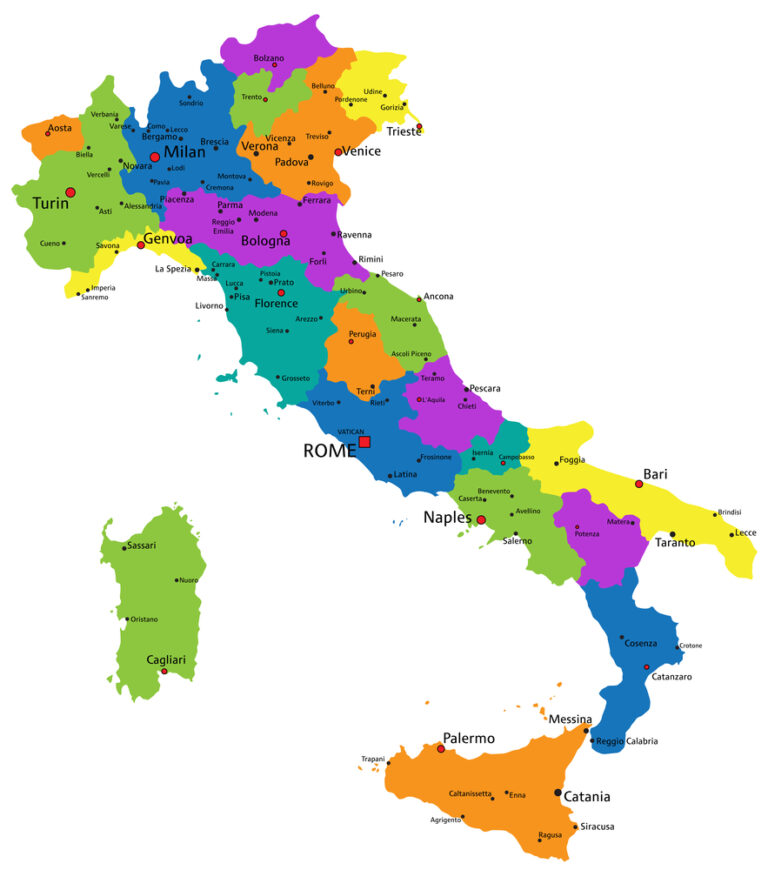
For example, someone from Naples may speak Neapolitan, while someone from Sicily may speak Sicilian. Even within the same regions, speech can change noticeably between provinces, cities, and villages. This is why “Italian dialect” is really an umbrella term for a complex linguistic landscape.
How Are Italian Dialects Categorized?
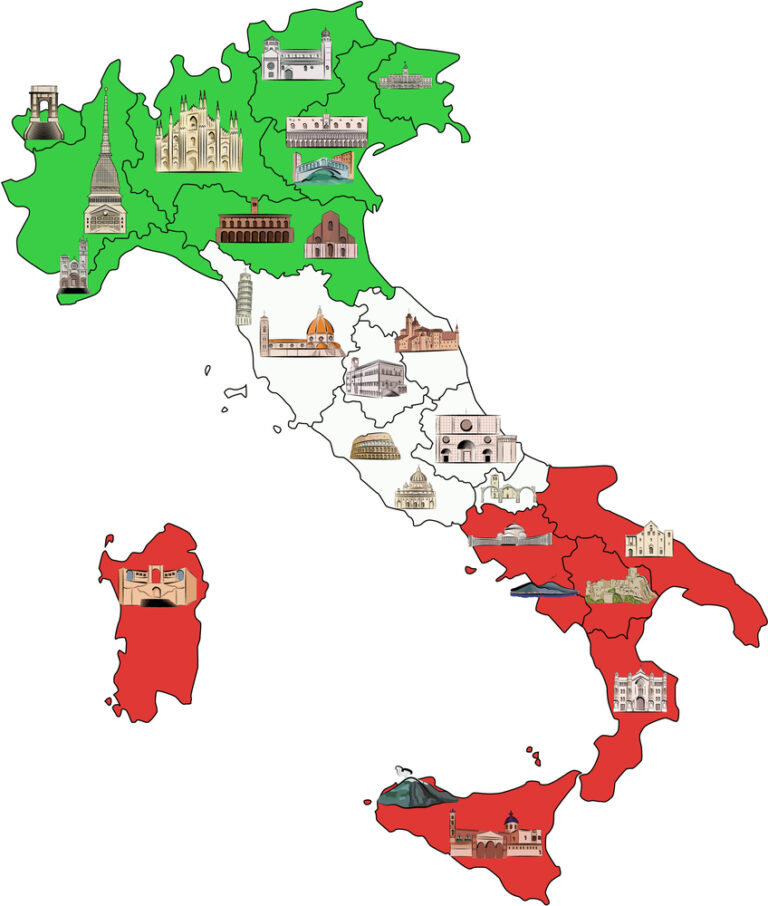
Italian dialects are generally categorized by geography and linguistic family. Each group features its own vocabulary, grammar, pronunciation, and historical influences.
Northern Italian Dialects
Northern varieties include Venetian, Lombard, Ligurian, Piedmontese, and Emilian-Romagnol. These dialects often show influence from neighboring French, Spanish, Germanic, Etruscan, and Celtic languages. Because of those historical influences, many northern dialects can sound and are structured quite differently from Standard Italian.
Central Italian Dialects
Central dialects include Tuscan, Romanesco, Umbrian, and Marchigiano. These varieties are generally closer to Standard Italian, especially Tuscan. Standard Italian developed largely from the literary Tuscan dialect of Florence, shaped by writers such as Dante, Petrarch, and Boccaccio.
Southern Italian Dialects
Southern varieties include Neapolitan, Calabrian, Apulian, Lucanian, and Sicilian. These dialects preserve many older linguistic features and reflect centuries of contact with ancient Greek, Arabic, Spanish, and Norman French. They remain strongly tied to regional identity and family heritage.
Sardinian
Sardinian deserves special mention because it is often considered one of the most distinct Romance languages spoken in Italy. Due to Sardinia’s historical isolation, Sardinian developed unique linguistic features that set it apart from both Standard Italian and many mainland dialects.
Officially Recognized Languages in Italy
In addition to Italy’s many regional dialects, the Italian government officially recognizes 12 minority languages. These are Albanian, Catalan, German, Greek, Slovene, Croatian, French, Franco-Provençal, Friulian, Ladin, Occitan, and Sardinian.
This distinction is important because Italy’s linguistic diversity includes both informal regional dialects and legally protected minority languages. Together, they show how deeply language is connected to local history, geography, and culture.
Which Italian Dialect Is the Most Widely Used in Italy Today?
Modern Standard Italian is based on the 14th-century Florentine (Tuscan) dialect, which achieved prestige because literary giants like Dante, Petrarch, and Boccaccio chose to write their masterpieces in the Florentine vernacular rather than Latin. Following the Risorgimento (Italian unification) in 1861, the new government established this literary language as the official national language in an effort to forge a shared identity across an economically, socially, and politically fragmented peninsula. While it served as the official state language and became the standard for literature, it wasn’t widely spoken by the general public until the 20th century, when compulsory education, military service during the World Wars, and the rise of mass media (especially television) unified the country linguistically.
When you learn Italian today, you will always be taught the official standard version of Italian. Although there are many apps for language instruction, the most effective way to begin learning Italian is through structured language instruction. Fondazione Italia offers Italian language classes for students of all ages, including adult Italian classes and kids’ Italian classes, which include not only grammar but conversation, which is an important element lacking from many language learner apps like Duolingo. Learners can also deepen their understanding of Italian culture through Italian workshops and events.
Should You Learn an Italian Dialect?
If you have family roots in a specific region, learning a dialect can be a beautiful way to connect with your heritage. Dialects can help preserve family stories, regional traditions, and cultural identity. Although many dictionaries exist for specific dialects, it is rare to find a course that teaches a regional dialect. Some Italian language schools or cultural institutes like Fondazione Italia will offer online dialect workshops on specific dialects like Sicilian, Roman, and Neapolitan that discuss the history behind each dialect and common phrases used.
However, for most learners, Standard Italian should come first. Once you have a strong foundation, regional dialects become easier to appreciate, recognize, and explore.
Why Standard Italian Is the Best Place to Start
So, how many Italian dialects are there? Italy has over 30 major dialect groups, hundreds of local vernaculars, and 12 officially recognized minority languages. Many of these varieties are not merely accents, but distinct regional languages with their own histories and structures.
But if you are wondering which form of Italian is most proper and widely understood, the answer is clear: Standard Italian. By learning Standard Italian first, you gain the tools to communicate across Italy while also opening the door to the country’s fascinating regional voices.